Most lens and screen annoyance comes down to convenience: when a good cloth isn’t handy, people grab tissues or rough fabric. After a few weeks with a 60-pack of 6×7 inch microfiber cloths, here is what actually works around the house—and when you still want a different tool.
Why You Shouldn’t Wipe Lenses with Whatever Is Handy
A lot of people still use tissues, shirt cuffs, or paper towels on glasses and camera lenses. It feels harmless until you’ve done it for months.
Tissues are rough. They contain wood fibers that act like a mild abrasive. Over time they can haze coatings and leave fine scratches you only notice when the light hits the lens just right.
Ordinary fabric doesn’t pick up oil well. Fingerprints and skin oil just get pushed around instead of lifted.
You also get lint and tiny fibers left behind, so the surface looks “clean” but isn’t.
I learned this the expensive way with my Sony camera. After a kids’ soccer morning I used a tissue on the lens because the microfiber cloth that came with it had disappeared into a backpack. A week later I noticed faint circular marks that weren’t there before. Cleaning them properly didn’t remove the marks, and the repair quote was several times what a whole 60-pack of microfiber cleaning cloths would have cost. That was the last time I trusted a tissue near anything with a coating. Use it longer and you start noticing what actually holds up.
What Is Microfiber, and Why Does It Work Better on Lenses?
How fine is microfiber really?
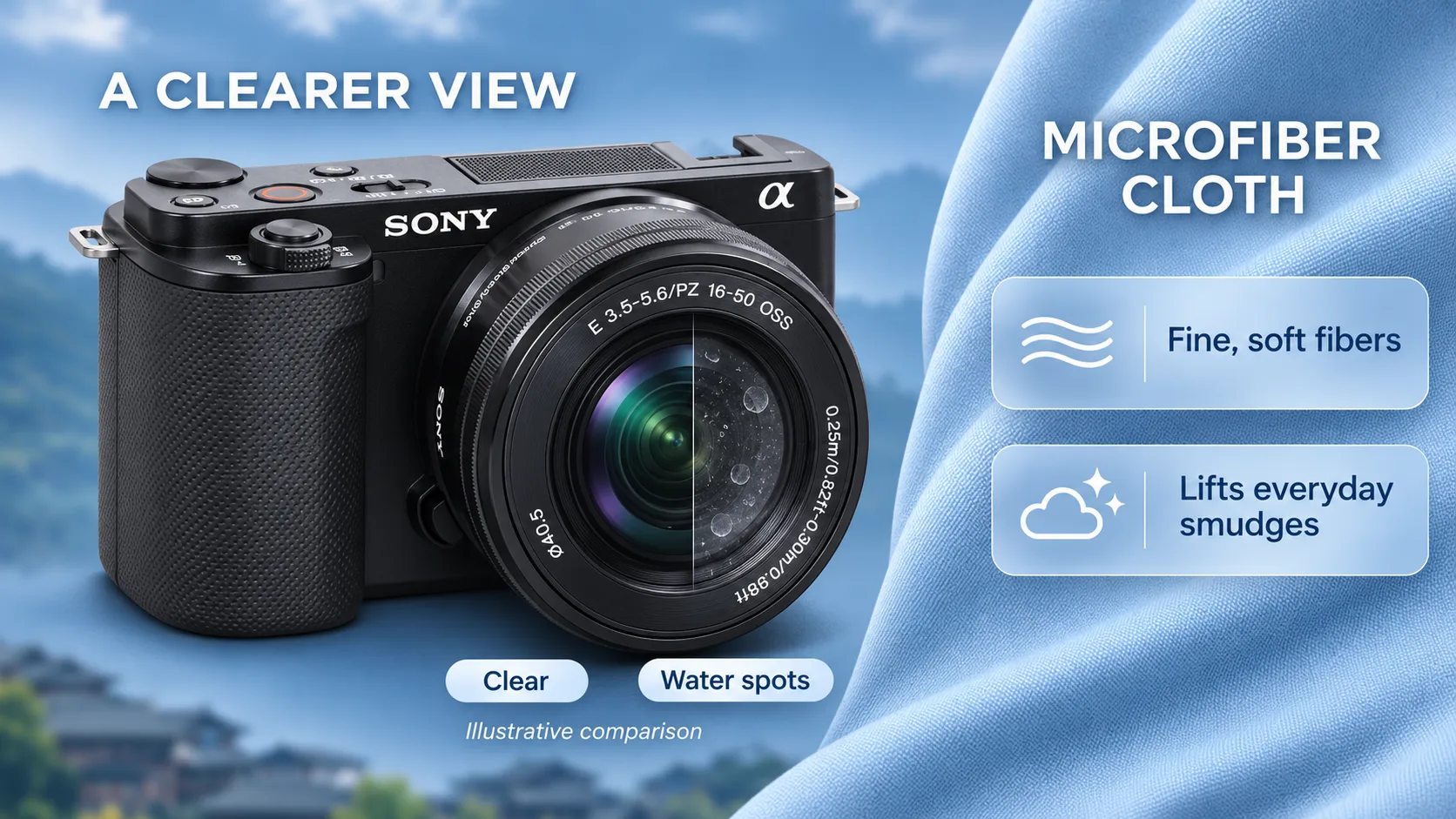
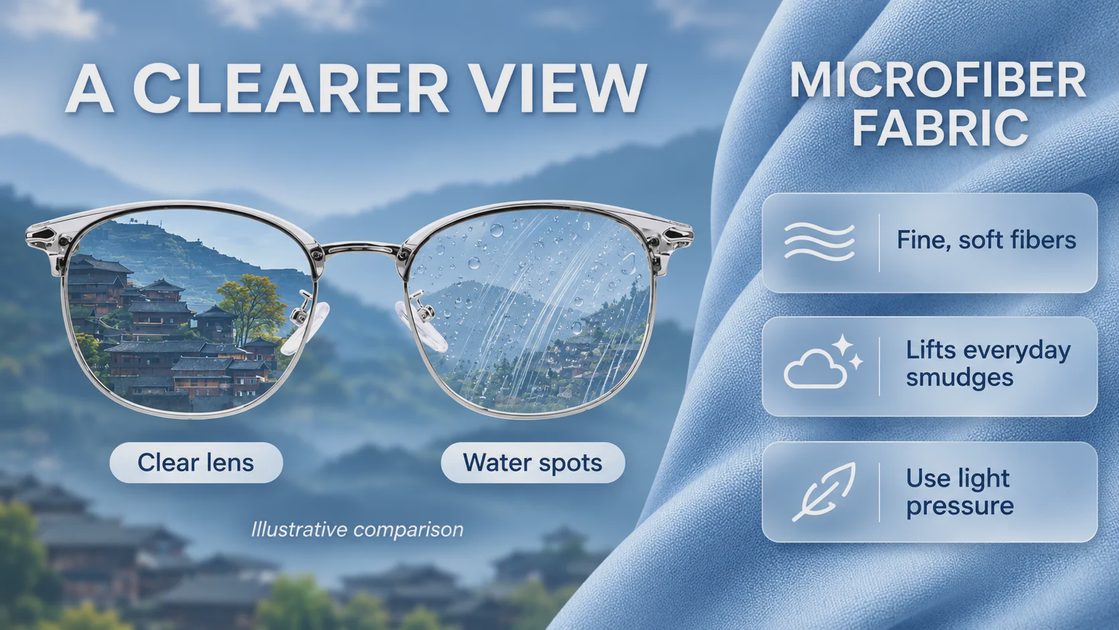
Microfiber is a synthetic fabric made from polyester and polyamide fibers that are far thinner than a human hair. Those tiny fibers create a huge surface area, so the cloth can pick up oil, dust, and fingerprints instead of just pushing them around. I don’t need a lot of liquid cleaner with them. A light wipe is usually enough for everyday smudges on my glasses or the Sony camera lens.
Soft, lint-free, and safer on coatings
The cloths in this 60-pack of microfiber cleaning cloths for glasses feel noticeably softer than the random ones that used to float around our house. They don’t shed the little white fibers that tissues leave behind, and after a few weeks of use on coated lenses and the BRAVIA screen I haven’t seen new scratches. That matters more to me than any marketing claim.
How to Use and Wash Them Without Leaving Streaks
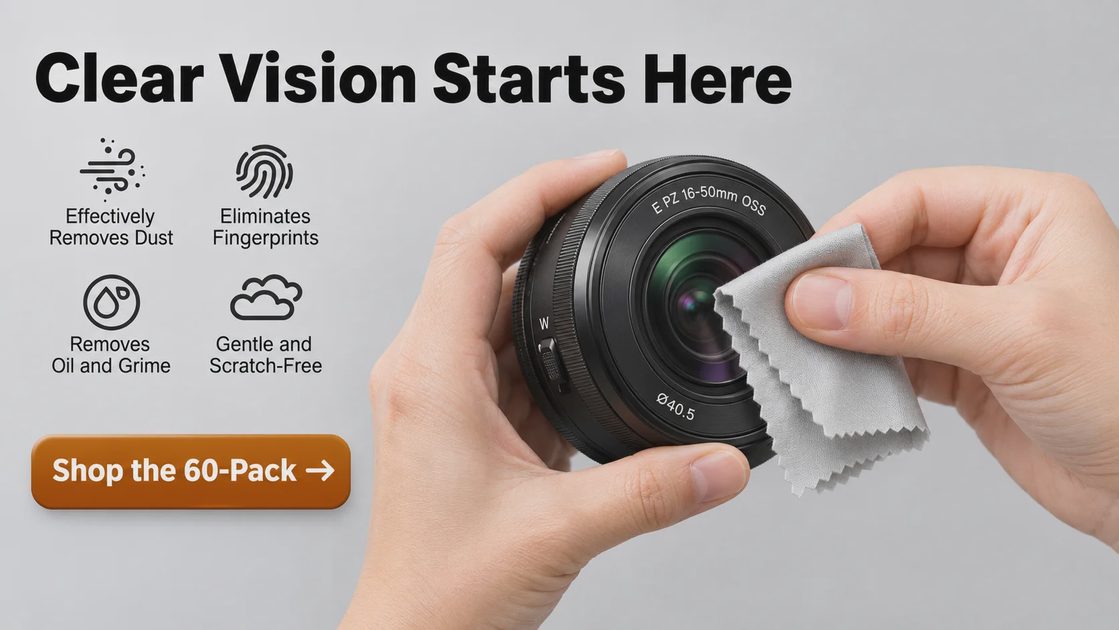
A dry pass handles light dust and minor smudges on glasses, phones, or a Sony ZV-E10 body after a weekend shoot. For sunscreen, heavier skin oils, or fingerprints that tend to smear, clear loose grit first, lightly mist cleaner onto a fold or use a slightly damp corner to lift the oil, then finish with a clean, dry section—and swap to a fresh cloth once it starts holding residue. When washing, hand-wash with mild detergent, rinse thoroughly, and skip fabric softener so coatings and fibers aren’t left with a hazy film.
What This Actually Saves You (Beyond the Low Price Tag)
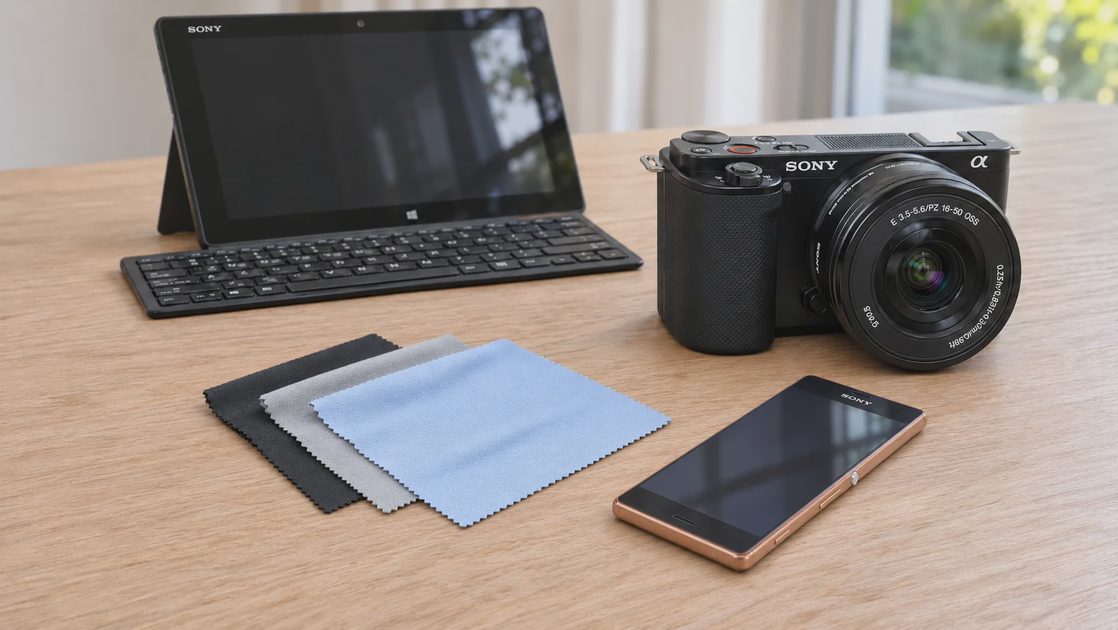
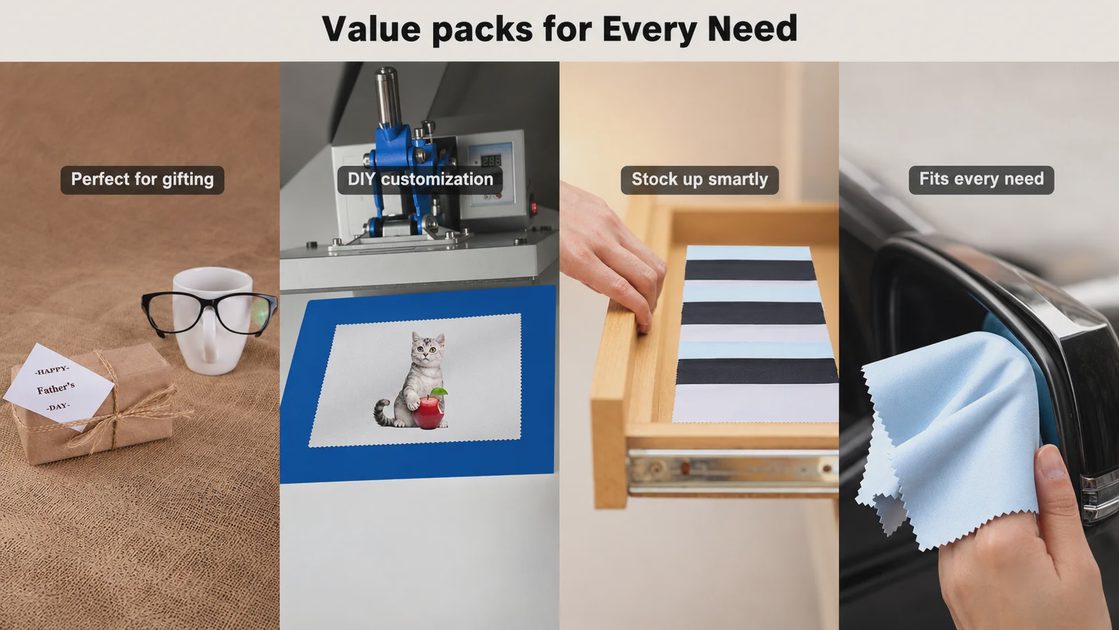
A $7.59 Prime price (or $9.99 regular price) for 60 cloths works out to roughly 13¢ to 17¢ per cloth. The real savings in a busy house isn’t just beating small multi-packs—it’s avoiding two quiet expenses: paying for frequent disposable wipes or small replacement packs, and risking fine marks on coated lenses or screens because the one good cloth you owned disappeared into a bag. Assigning black to camera gear, gray to glasses, and light blue to phones, tablets, and quick screen spots keeps oily cloths away from optics without buying specialty cloths for every room.
The 6×7 Inch Size Covers Most of What We Actually Clean
6×7 inch turns out to be a practical size for this house. It folds small enough to fit in a glasses case or camera pouch, yet it’s big enough to wipe a phone, tablet, or the Sony lens without constantly repositioning. I use them on eyeglasses, the camera, the kids’ devices, and even a quick pass on the BRAVIA when fingerprints appear during movie night. Nothing fancy, just enough coverage for real household use.
Washable and Reusable, So the Cost Stays Low

These microfiber cloths can be washed and used again. I hand-wash a few at a time with mild soap and let them air-dry. After several washes they still feel soft and pick up smudges without streaking the way a worn-out cloth does. Compared with disposable wipes, the long-term cost is lower and I’m not constantly restocking. For a busy household that goes through cleaning cloths, that matters more than a perfect first impression.
Who These Are For (and Who Should Skip Them)
These make sense if you:
Regularly clean glasses, phones, tablets, or a camera lens
Want enough spares so you stop reaching for tissues
Prefer a low-cost bulk option that can be washed
Where It Falls Short—and When to Skip It
Six-by-seven inches is plenty for glasses, phones, tablets, and quick spot-wiping, and the bulk count makes it easy to stash spares everywhere. Still, it isn’t the right fit if you want individually wrapped packets for travel pouches, need a large cloth for frequent full-screen cleaning on big TVs, or want dedicated optical supplies for high-value camera glass. If your main goal is heavy screen wiping or critical lens care, pair these spares with the right tool for that job instead of expecting one cheap bulk cloth to cover every scenario.
Final Thought
I’d rather keep a stack of plain microfiber cloths in the places we actually need them than keep gambling with tissues. This 60-pack of microfiber cleaning cloths for glasses is cheap, the 6×7 inch size fits real life, and they survive washing. If your household also collects fingerprints on every lens and screen in sight, it’s one of the small things that quietly makes ownership easier. Use it longer. Decide better.